From Bean to Art: Mastering the Chocolate Making Process Illustrations
When you are building a brand, especially one centered around artisanal goods or food, visual storytelling is your most powerful tool. You need imagery that does more than just decorate; it needs to convey warmth, quality, and the tactile experience of your product. This is exactly where the Chocolate Making Process Illustrations set steps in. It is not just a random collection of graphics; it is a curated visual narrative designed to take your audience on a journey from the raw cacao bean to the finished, glossy confection.
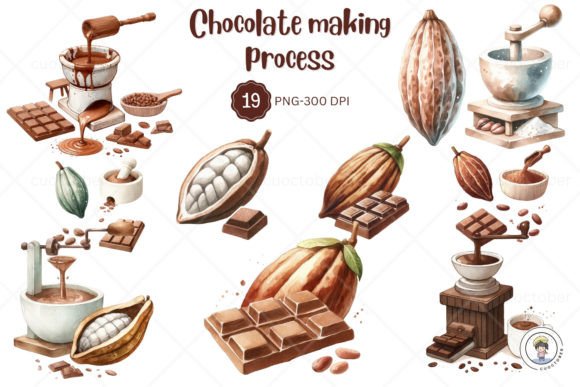
For designers and entrepreneurs alike, finding assets that feel authentic can be a challenge. Stock photos often feel sterile, but these illustrations offer a distinct personality. The style leans into a hand-crafted aesthetic that mimics the artisanal nature of chocolate making itself. Whether you are working on packaging design for a new candy bar or creating a storyboard for a bakery’s social media campaign, these visuals provide a cohesive look. The set includes 19 PNG files with transparent backgrounds and 19 JPG files with white backgrounds, both rendered at a massive 3000x3000 pixels (10"X10") at 300 DPI. This resolution is critical. It ensures that whether you are printing a tiny sticker for a coffee cup or a large frame artwork for a café wall, the lines remain crisp and the details true.
Visual Personality and Technical Versatility
Understanding the technical nature of these assets is key to using them effectively. Because they are delivered as high-resolution files compatible with sublimation, digital printing, and screen printing, your creative options are virtually limitless. Let’s talk about the visual appeal. These illustrations capture the richness of the chocolate-making process. You have the imagery of the cacao pods, the fermentation, the grinding, and the molding. This isn't just generic "chocolate art"; it is a process breakdown that adds depth to your brand identity.
From a design perspective, the transparency of the PNG files is a massive time-saver. If you are working on a complex layout for a scrapbook or a layered web design element, you don’t have to spend hours cutting out backgrounds. You can simply drop the illustration onto your canvas. This seamless integration allows for a more fluid workflow, which is essential for small business owners who are wearing the hat of both the CEO and the graphic designer.
Consider the application in digital printing transfer and DTG (Direct to Garment) scenarios. The 300 DPI resolution is the industry standard for high-quality reproduction. This means the illustrations are ready for commercial use immediately. Imagine creating a series of t-shirts for a local chocolate festival. You can use the "bean" illustration for the staff shirts and the "finished bar" illustration for the merchandise. The consistency across the 19 files allows you to create a product line that looks cohesive and professional, elevating your perceived value in the market.
Strategic Applications for Designers and Marketers
How do you actually implement these illustrations into your workflow? The answer lies in versatility. For packaging design, these assets are invaluable. Chocolate wrappers often suffer from cluttered layouts. By using a single, high-contrast illustration from this set, you can create a "window" effect that highlights the product inside. This approach aligns with modern typography trends where imagery and text work in tandem rather than competing for attention.
For content creators and bloggers, these illustrations serve as excellent visual breaks in long-form content. If you are writing a recipe blog or a history of cacao, inserting these process illustrations helps maintain reader engagement. They act as visual anchors that guide the eye down the page. Furthermore, for social media graphics, these images are perfect for carousels. You can dedicate one slide to each step of the process, educating your audience while keeping them swiping.
Don't overlook the potential for mugs and bags. The sublimation-ready nature of these files means you can create merchandise that sells itself. A tote bag featuring the intricate machinery of a chocolate grinder appeals to a specific aesthetic—perhaps the hipster barista or the home baker. It transforms a utility item into a statement piece. The clarity of the vector-like quality in these PNGs ensures that even on curved surfaces like mugs, the image doesn’t distort or pixelate.
Elevating Brand Perception with Consistency
One of the biggest hurdles for growing brands is maintaining visual consistency. You might have a great logo, but if your supporting imagery is all over the place, your brand identity feels fragmented. Using a unified set like the Chocolate Making Process Illustrations solves this problem. It creates a visual language. When a customer sees your pillow design, then recognizes the same artistic style on your cards or website, trust builds. They recognize you. That is the power of a consistent design asset library.
For those in the editorial design space, such as cookbook authors or magazine publishers, these illustrations offer a way to break up text-heavy layouts without relying on expensive custom commissions. They add a layer of sophistication and thematic relevance. The style is timeless enough to fit into a vintage, rustic aesthetic but clean enough to work in a modern, minimalist layout.
Ultimately, the value of this set lies in its ability to bridge the gap between the raw material and the finished product—both in the context of chocolate and in your design projects. It gives you the professional edge needed to stand out in a crowded marketplace. Whether you are a hobbyist creating a gift for a friend or a marketer launching a global campaign, having high-quality, process-oriented illustrations at your fingertips changes how you create. It allows you to focus on the story you want to tell, knowing the visual foundation is solid and ready to print.