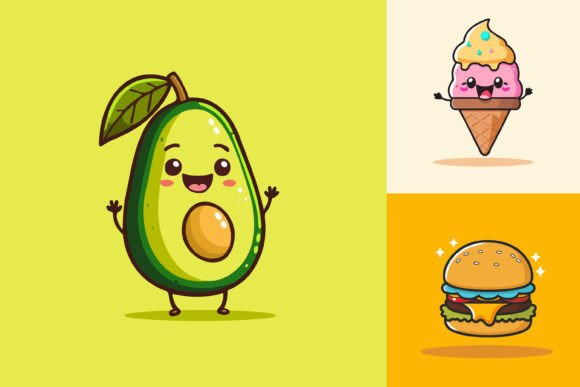
Cute Vector Illustrations: Your New Go-To Design Asset
Every designer hits a point where a project needs an injection of personality. You have the layout, the typography, the color palette, but something feels flat. This is where a versatile set of Cute Vector Illustrations becomes an indispensable part of your creative toolkit. We created this collection of 15 high-quality vectors specifically to solve that problem, providing charming, scalable graphics that work across a multitude of platforms. These aren't just static images; they are fully editable design assets built to adapt to your vision.
Understanding the Visual Character and Versatility
At first glance, the appeal of these illustrations is their friendly, approachable style. They strike a balance between whimsy and professionalism, making them suitable for serious business applications that still want to feel human. The line work is clean, and the compositions are balanced, ensuring they hold up well whether they are the focal point or a supporting element. Because the color mode is RGB, they are optimized for digital screens, making them perfect for modern web design and social media graphics.
The true value, however, lies in the file structure. You aren't just getting flat images. The main folder includes AI, EPS, and JPEG files. This means you have complete control over every element. If a client’s brand identity requires specific hex codes, you can swap them in seconds. If you need to scale a character up for a massive event backdrop or down for a favicon, the vector integrity remains intact. This flexibility is what separates amateur projects from professional design assets.
Real-World Applications for Modern Creatives
For the entrepreneur or small business owner, these illustrations offer a way to break free from generic stock photography. Imagine using them to illustrate a complex process on your website. Instead of a boring bulleted list, you can use these characters to guide the user through the steps. This application of modern typography and illustration creates a narrative flow that keeps visitors engaged longer, reducing bounce rates and improving user experience.
Marketers and content creators will find them particularly useful for the fast-paced world of Instagram, Twitter, and Facebook. Social feeds are crowded, and text-only posts often get scrolled past. A Cute Vector Illustration used as a header for a promotional post or as a sticker in an Instagram Story adds immediate visual weight. They work exceptionally well for "Save for Later" infographics or breaking up long threads on Twitter with visual cues that maintain the reader's interest.
Integrating Illustrations with Typography and Layout
A common challenge is integrating illustrations with text so they feel cohesive rather than pasted on. The key is to treat these vectors as part of your typographic hierarchy. For instance, if you are designing a flyer for a local event, you might use the illustration to create a visual anchor. You can layer text over a faded background version of the vector or place a detailed illustration next to your headline to draw the eye downward toward the body copy.
When working with editorial design or magazine layouts, these vectors can serve as spot illustrations. They are excellent for filling negative space in a column without cluttering the page. Because they are 100% vector, you can manipulate the shapes to fit awkward spaces, perhaps extending a background element or cropping a character to peek over the edge of a text block. This level of customization is impossible with standard raster images.
Practical Guide to Editing and Customization
Getting started is straightforward, but a few tips can help you maximize the potential of the pack. Since the files are provided in AI and EPS formats, you will need vector editing software like Adobe Illustrator or Affinity Designer.
- Color Adjustments: Start by grouping the elements and using the "Recolor Artwork" tool in Illustrator. This allows you to map the existing colors to a new palette instantly, saving hours of manual selection.
- Component Isolation: Don't feel limited to the 15 compositions provided. Break them apart. You might find that a hand from one illustration pairs perfectly with a desk setup from another. Creating unique mashups increases the longevity of the asset pack.
- Format Conversion: While the source files are vectors, you will eventually need to export them for specific uses. For web use, SVG is the best format for scalability and fast loading. For print projects like a poster or flyer, ensure you export at high resolution (300 DPI) if converting to raster formats like PNG or TIFF.
Strategic Use in Branding and Marketing
For publishers and bloggers, consistency is the currency of trust. Using a consistent set of illustrations helps build a recognizable visual language. If you use these vectors in your weekly newsletter header and your Pinterest pins, your audience will start to recognize your content before they even read the title. This subtle reinforcement of brand identity builds loyalty over time.
Consider the application in packaging design as well. If you are launching a product aimed at a younger demographic or one that emphasizes a fun, lighthearted vibe, these illustrations can adorn the box or label. They add a tactile quality to the design that suggests care and attention to detail. Similarly, for event paper like invitations or programs, the vectors add a festive, celebratory tone that standard serif or sans-serif fonts alone cannot achieve.
Ensuring Professionalism and Quality
While the style is "cute," the execution is professional. When selecting design assets, it is crucial to look at the details. Zoom in on the anchor points in the vector file. Are they clean? Are there unnecessary points that make the curves jagged? In high-quality packs like this, the paths are optimized for smooth scaling. This attention to technical detail ensures that whether you are printing a business card or a billboard, the lines remain crisp.
Furthermore, the included help file is a resource often overlooked. It typically contains information on the specific fonts used within the illustrations (if any text is embedded) or links to complementary typefaces. This takes the guesswork out of font pairing, allowing you to create harmonious layouts where the illustration and the text speak the same visual language.
Final Thoughts on Creative Flexibility
The digital landscape demands adaptability. A single image needs to work as a square crop for Instagram, a wide banner for a LinkedIn article, and a vertical graphic for a Pinterest pin. Because these Cute Vector Illustrations are scalable, you have the freedom to recompose the artboard to fit any aspect ratio without losing quality. You can zoom in on a detail for a close-up effect or pull back to show the full scene.
Ultimately, this collection is about saving time while elevating quality. It bridges the gap between a concept and a finished product. Whether you are a hobbyist making cards for friends, a marketer launching a campaign, or a designer building a website, having a library of editable, high-quality vectors removes the friction from the creative process. It allows you to focus on the message and the strategy, knowing the visual execution is already handled.